Board resolution template
- Hours a year on board paperwork for grants
- 8
- Computed on this page from the inputs below
- Days between board meetings, on average
- 60.83
- Computed on this page from the inputs below
- Days of lead time a resolution really needs
- 74.83
- Computed on this page from the inputs below
- Share of your applications that need one, percent
- 33.33
- Computed on this page from the inputs below
Where these sheets touch federal rules they cite the Uniform Guidance at 2 CFR part 200 rather than paraphrasing it: 200.414 sets the de minimis indirect rate at up to 15% of modified total direct costs for a recipient with no negotiated rate, and 200.334 requires award records to be kept for three years from the date the final financial report is submitted. Every other number in the sheets is one you type in, because your partners, your sections and your hours are not ours to guess.
Email me this result
We will send you these figures and a link back to them. One email, nothing else unless you tick the box.
The figures above are one application worked as an example (8). Put your own partners, sections and hours in and the answer follows as you type.
Download the Board resolution template worked example (CSV)
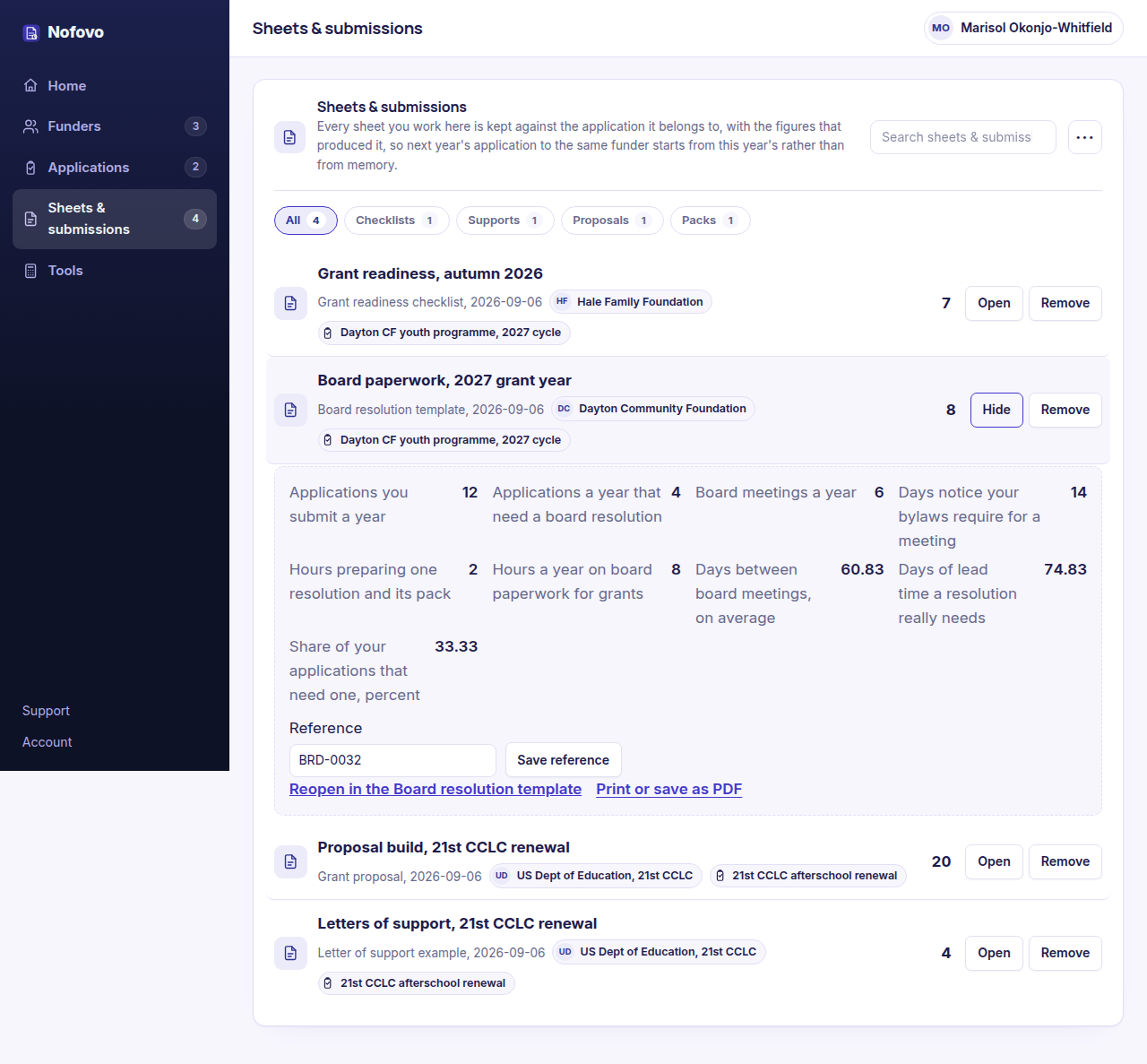
Some applications need a board resolution: a minuted decision authorising the submission, accepting a match, or naming a signatory. It is a small document with a long lead time, because it needs a meeting and your bylaws set the notice. This sheet costs the paperwork across a year and, more usefully, works out the real lead time a resolution needs, which is the gap between board meetings plus the notice period, and that figure is almost always larger than the person planning the deadline assumed.
Where the constants in this tool come from
What a grants manager asks before using the Board resolution template
Which applications actually need a resolution?
Typically federal awards, anything committing a match or a cost share, and anything above a threshold your own bylaws set. Read the notice of funding opportunity and your bylaws; both matter and they say different things.
Can the board approve applications in advance?
Many do, with a standing resolution authorising the executive director to submit up to a value. It is the single most effective way to remove this from the critical path, and it is a conversation to have at a calm meeting rather than a panicked one.
What goes in the resolution itself?
What is being authorized, to whom, up to what amount, and who may sign. Short is better; the funder wants evidence that the board decided, not the debate.